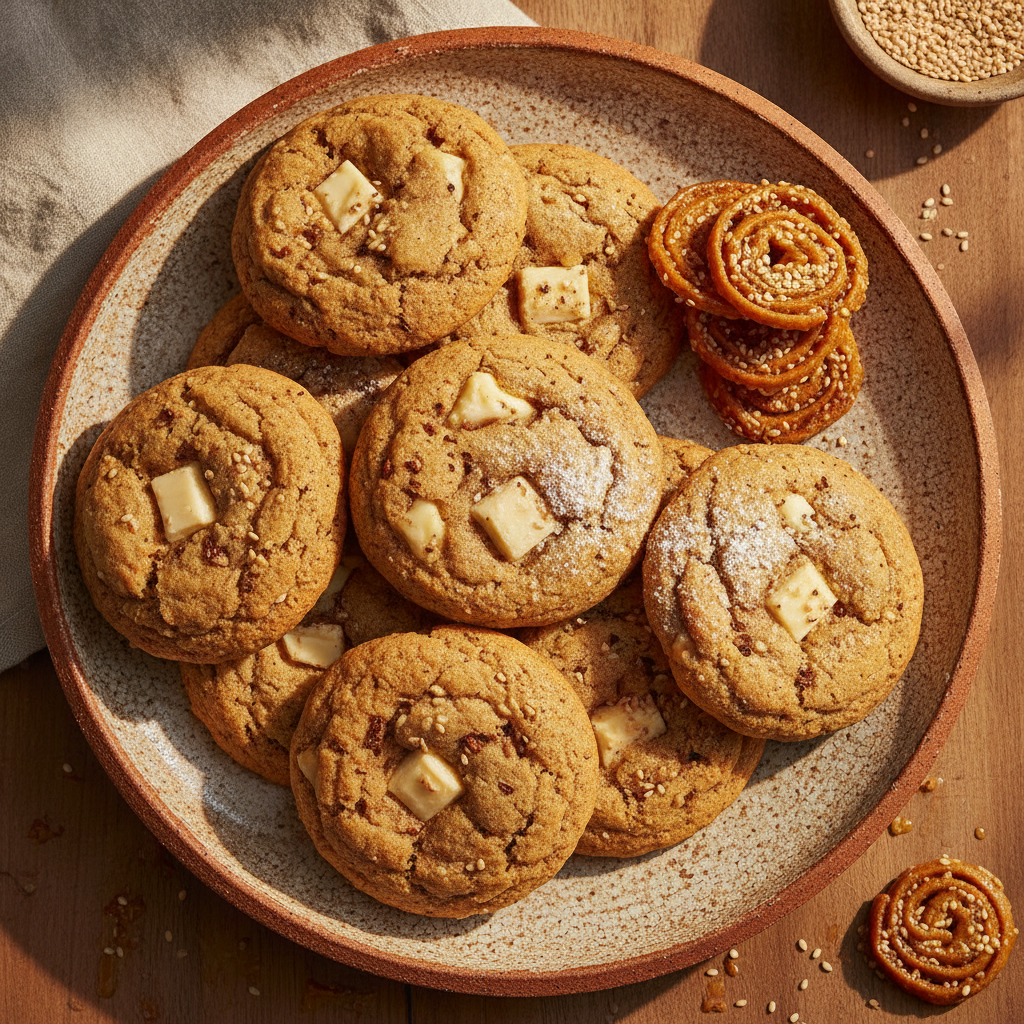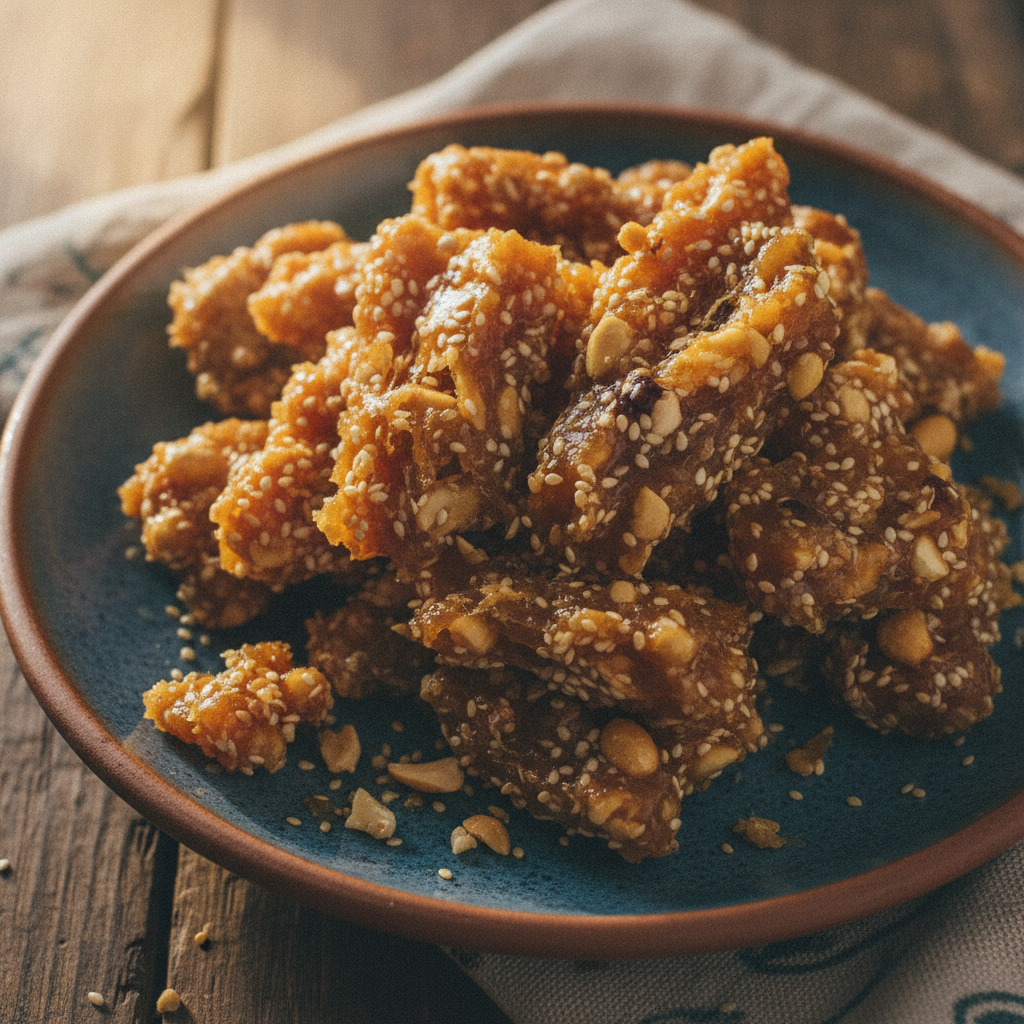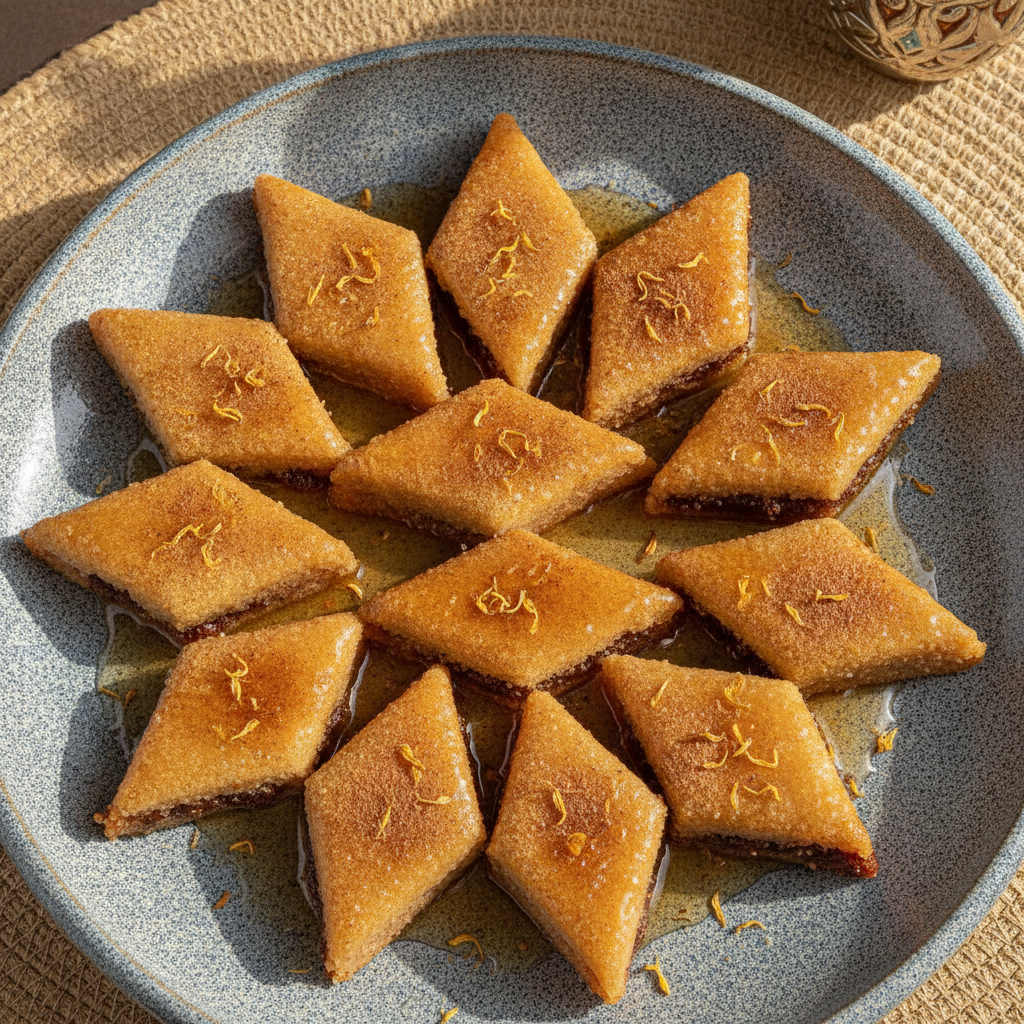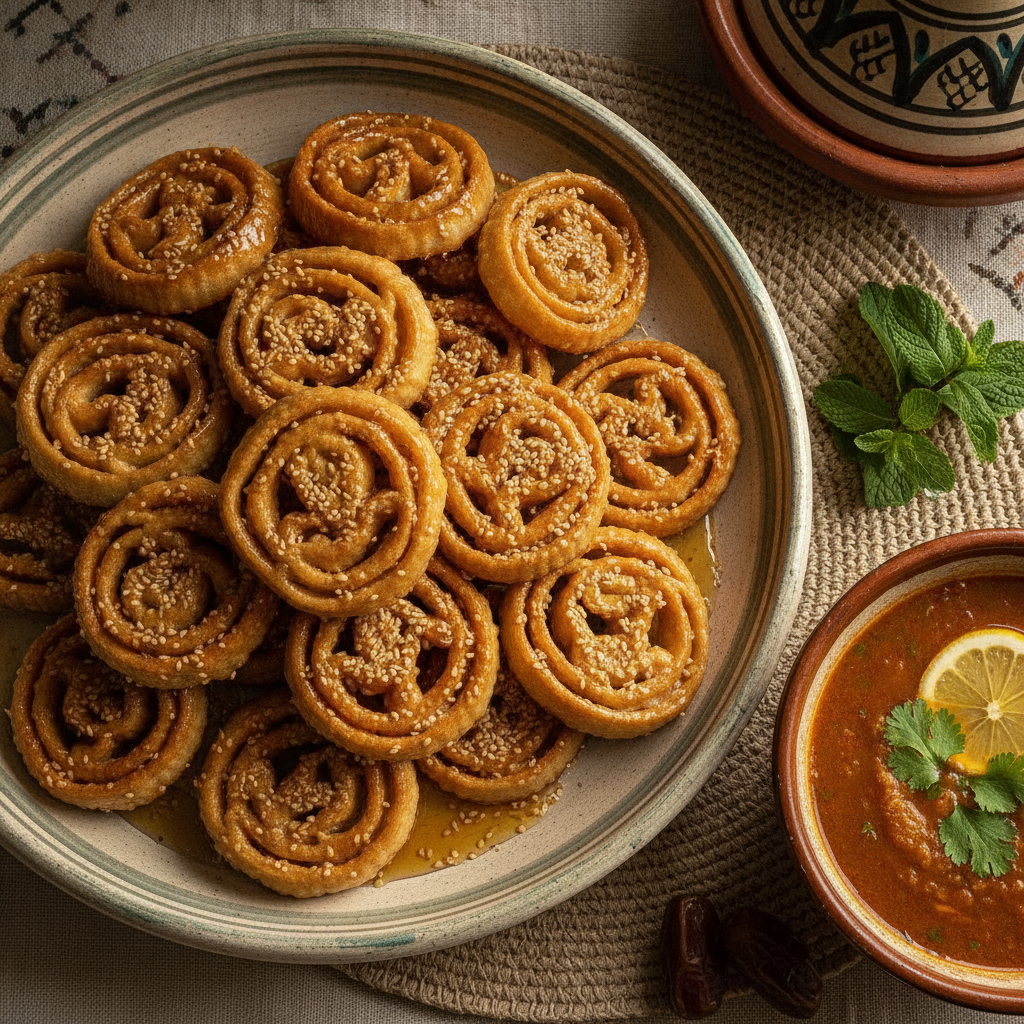
Moroccan Chebakia (Sesame and Honey Cookies)
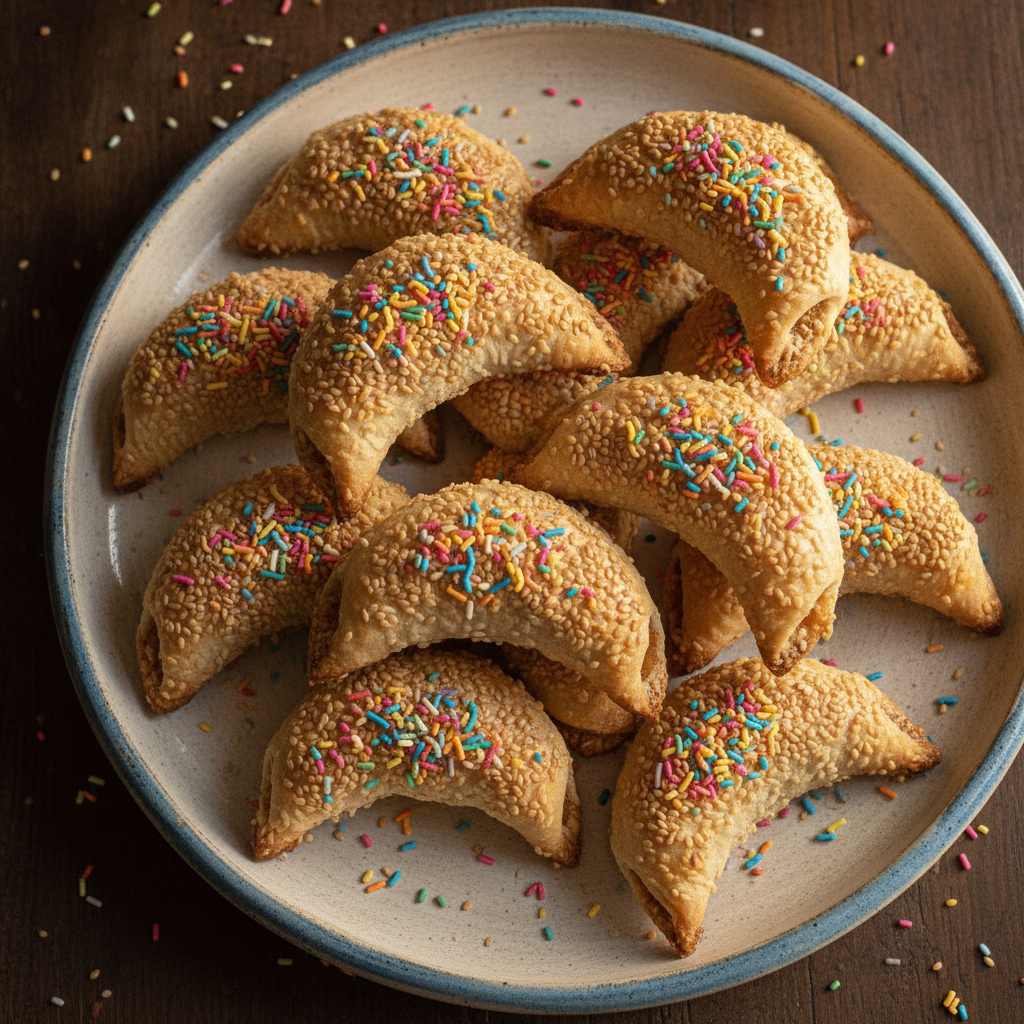
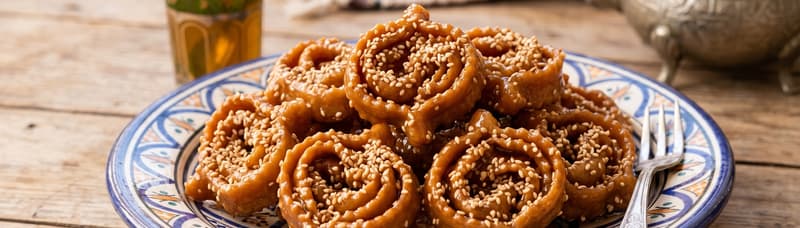
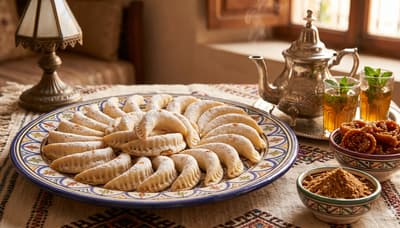
Traditional Moroccan sesame cookies folded into intricate flower shapes, deep-fried to a golden crisp, and immediately drenched in warm honey flavored with orange blossom water. A Ramadan essential.
Dietary
Discover 18 vegetarian Moroccan recipes — from tagines and couscous to family classics, with portion scaling and printable recipe sheets.

Traditional Moroccan sesame cookies folded into intricate flower shapes, deep-fried to a golden crisp, and immediately drenched in warm honey flavored with orange blossom water. A Ramadan essential.

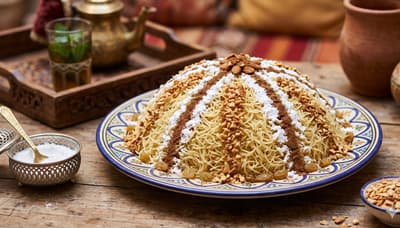
A traditional Moroccan dish of steamed, short vermicelli noodles naturally sweetened with raisins, butter, and decorated with cinnamon, powdered sugar, and crushed toasted almonds. It is often served as a sweet follow-up to a savory main course or as a festive dish.

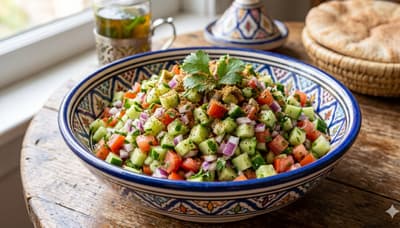
A refreshing, vibrant, and simple Moroccan salad made with finely diced tomatoes, cucumbers, and onions, tossed in a light dressing of olive oil, lemon juice, and ground cumin.

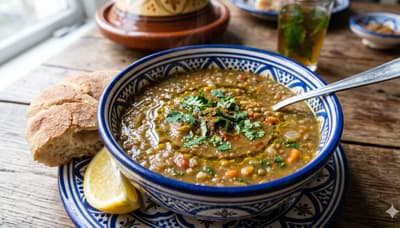
A traditional and comforting Moroccan lentil stew packed with warm spices, fresh herbs, and tomatoes. Perfect as a hearty meal served with crusty bread.

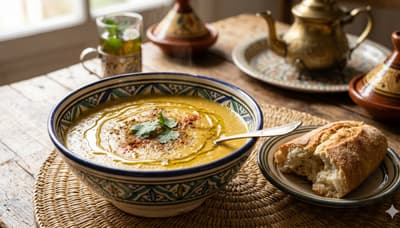
A comforting, creamy Moroccan soup made from dried split fava beans, garlic, cumin, and extra virgin olive oil. Traditionally served for breakfast or as a hearty starter.

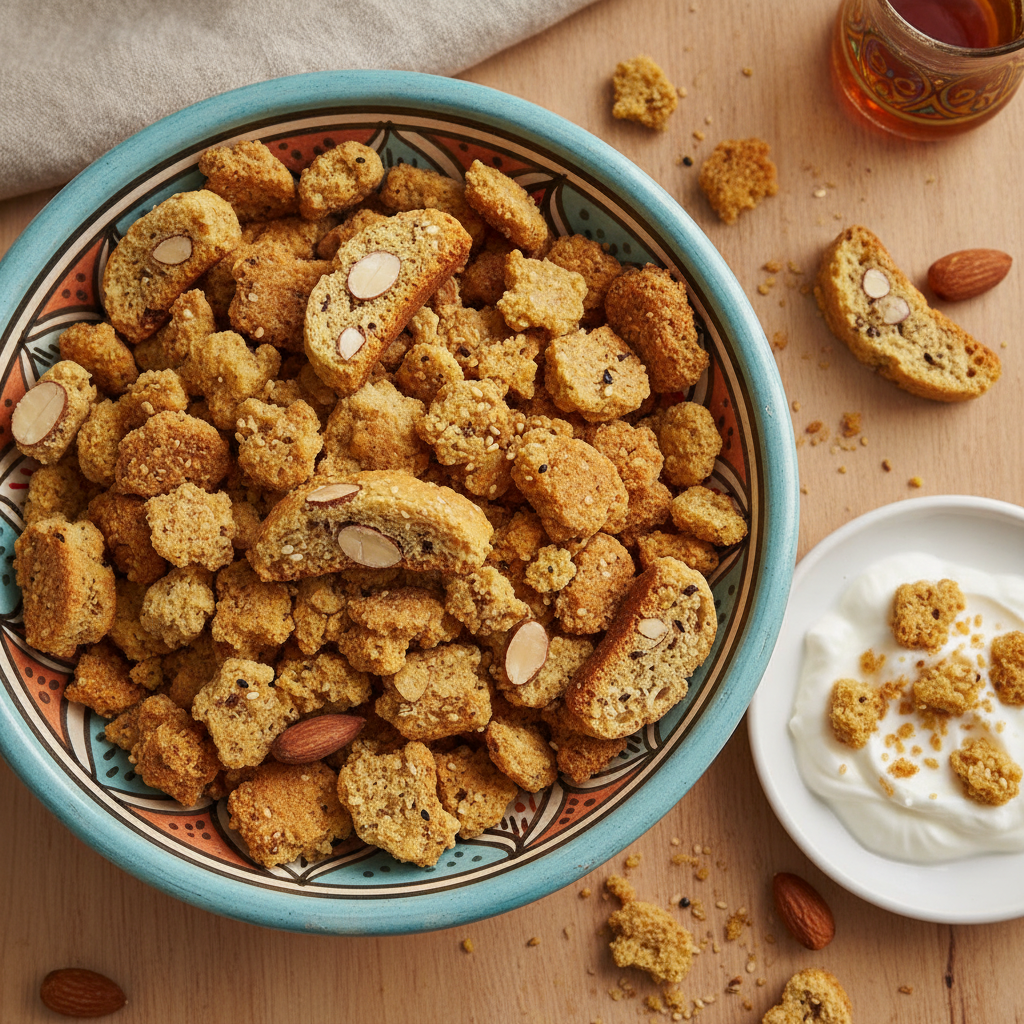
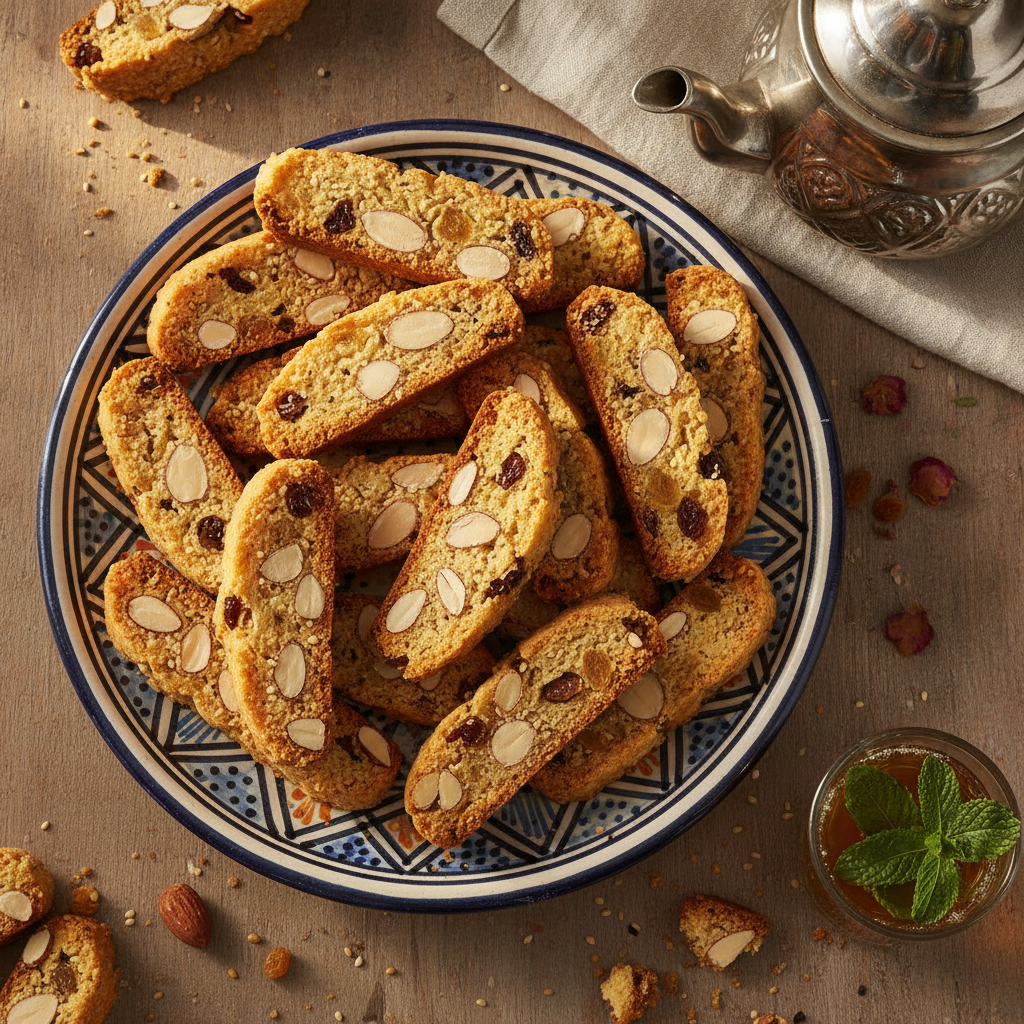
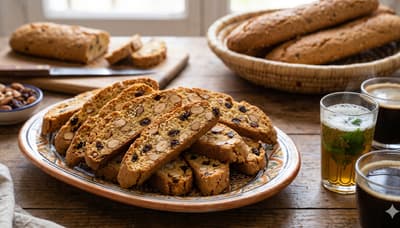
Twice-baked almond biscotti packed with toasted nuts, sesame, and plump raisins—fekkas are built for dunking in mint tea or coffee. Logs are baked until firm, sliced on a bias, then returned to a low oven until completely dry and shatteringly crisp. Every Moroccan grandmother has her ratio of almonds to raisins; this version balances sweetness and crunch.

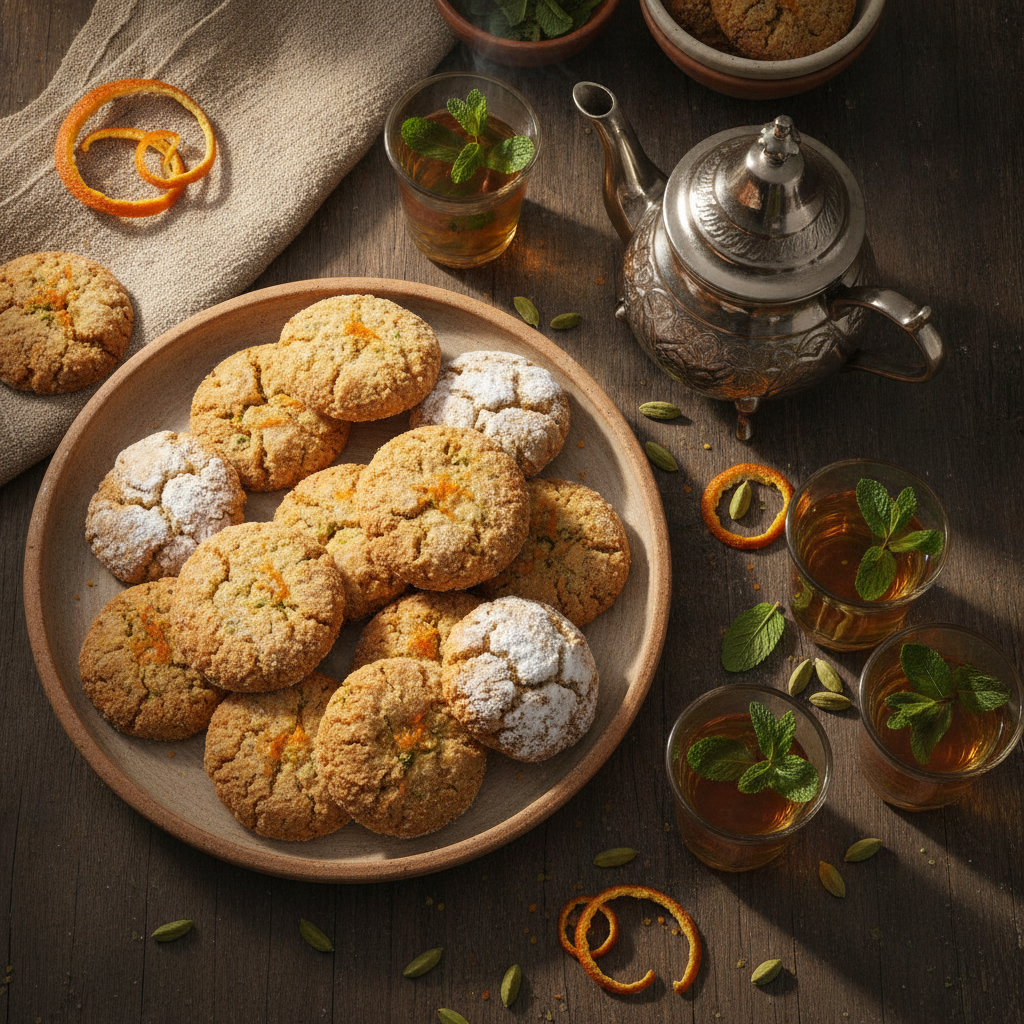
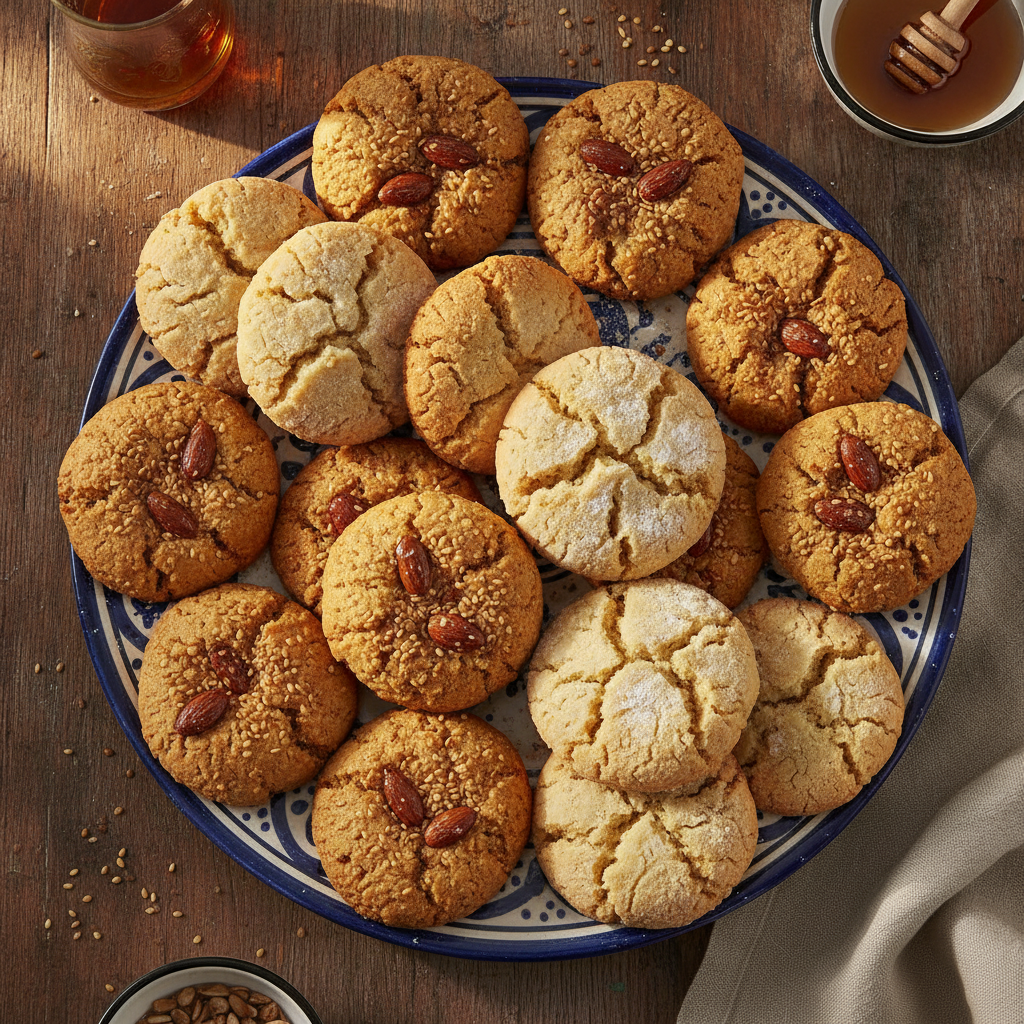
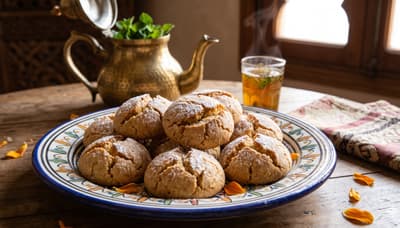
Ghriba are Morocco’s “smiling cookies”—chewy-centered, crackled-top rounds made from ground almonds, sugar, and egg whites with almost no flour in the classic version. As they bake, the tops split open like smiles. Variations use walnuts or coconut; orange blossom and a dusting of powdered sugar make them irresistible with tea.

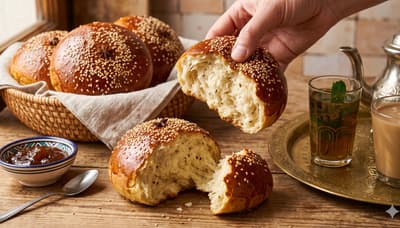
Krachel are brioche-like sweet rolls perfumed with anise, sesame, and orange blossom—Fez and northern Morocco’s answer to the French brioche, with a North African spice cabinet. A long, cool proof develops an open, cotton-soft crumb; an egg wash and sesame crust glisten from the bakery window. Tear one open for breakfast with jam and café au lait or mint tea.

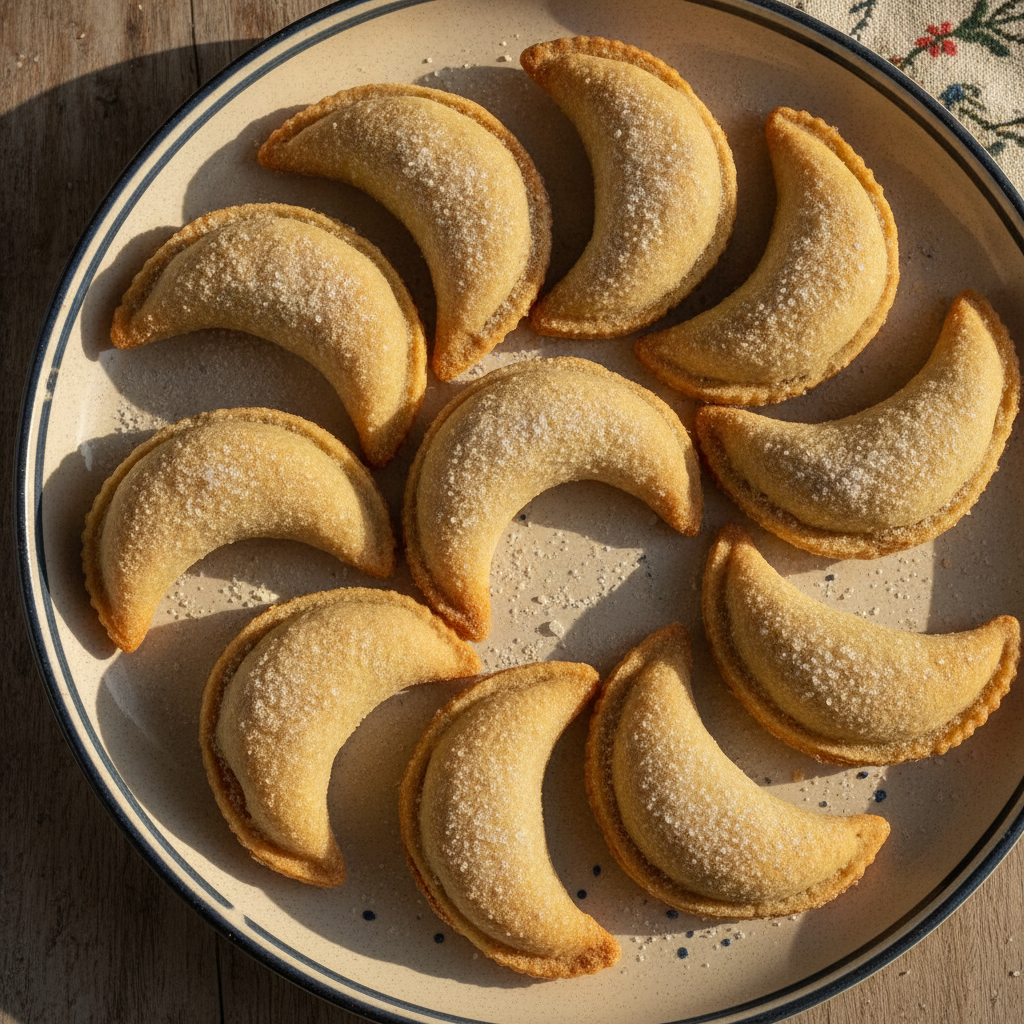
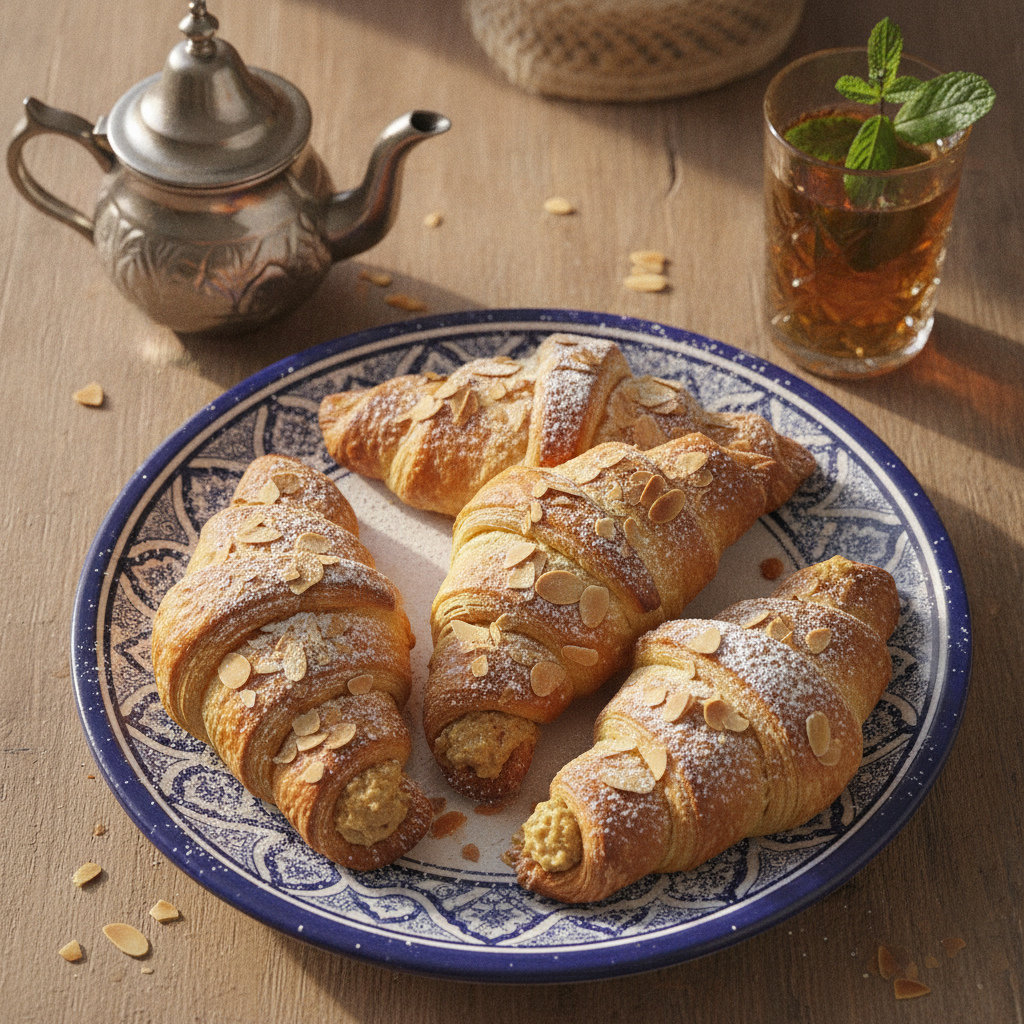
The crown jewel of Moroccan patisserie—delicate crescent cookies with a paper-thin warqa-style dough wrapped around a lush almond paste scented with cinnamon and orange blossom water. Named “gazelle horns” for their curved shape, they melt on the tongue and appear at weddings, Eid tables, and afternoon tea alongside sellou and chebakia.

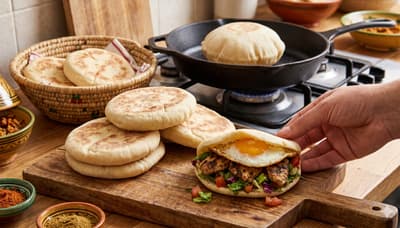
Batbout are soft, chewy stovetop breads that puff like balloons in a dry skillet, forming a hollow pocket inside—Morocco’s answer to pita. They share the same yeast dough family as khobz but are rolled thinner and finished on the griddle rather than in a bread oven, making them ideal for sandwiches stuffed with grilled meats, salads, or fried eggs.

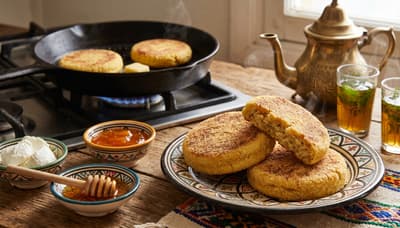
Harcha is Morocco’s beloved “rough bread”—a crumbly, biscuit-like round made from coarse semolina bound with butter, milk, and baking powder. No yeast means it comes together quickly; the dough is patted into disks and pan-fried until the exterior is golden and slightly gritty while the inside stays moist. Wonderful split open with soft cheese, jam, or a drizzle of honey at breakfast.

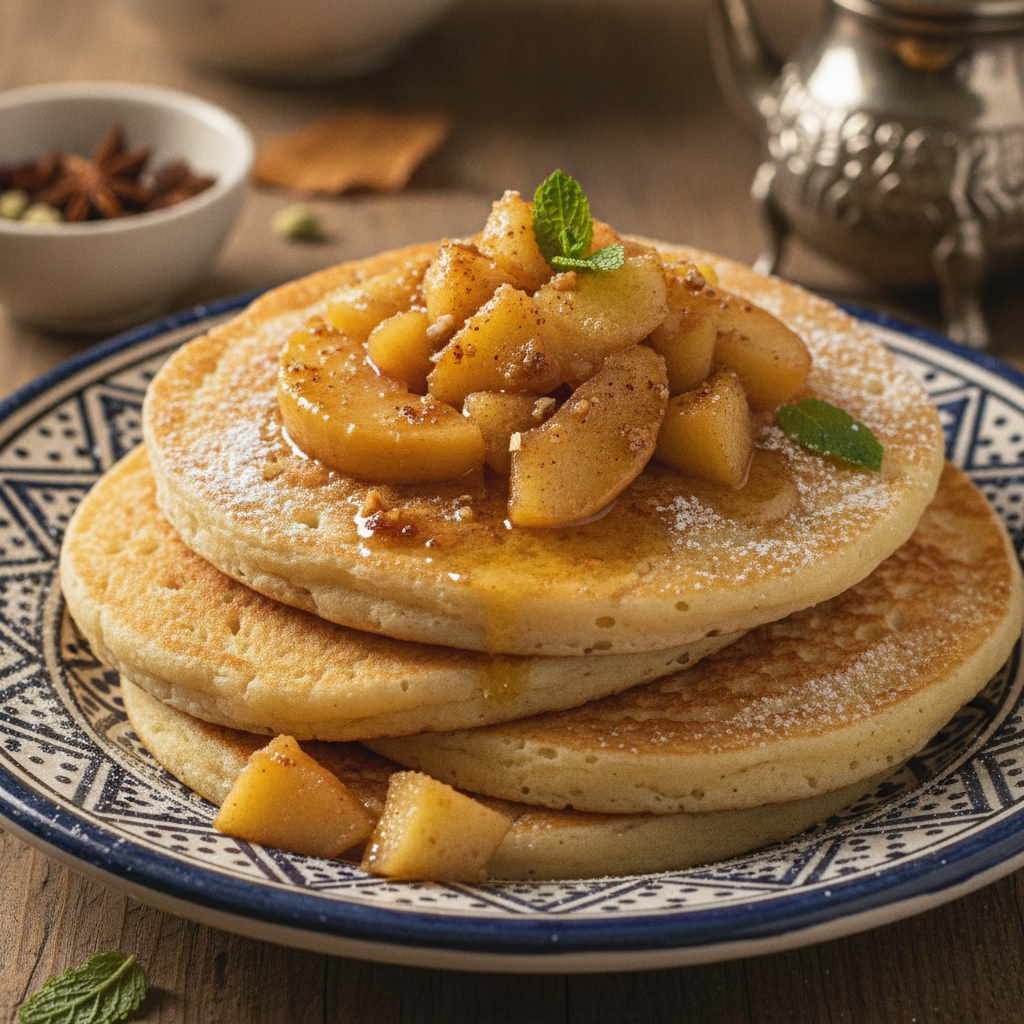
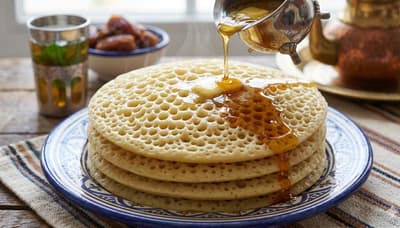
Nicknamed “thousand-hole pancakes,” baghrir are spongy, lace-like crepes made from semolina and yeast. They cook only on one side in a cool pan—no flipping—so heat travels upward and hundreds of tiny bubbles burst on the surface, leaving a honeycomb ready to soak up butter and honey. A Ramadan and weekend breakfast favorite across Morocco and Algeria.

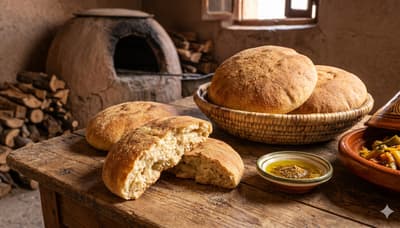
The cornerstone of every Moroccan table—this round, slightly domed loaf has a crackly golden crust and a soft, airy crumb perfect for scooping tagines, salads, and dips. Bakers often blend white flour with whole wheat or semolina for nutty depth. A hot oven and steam—or a cast-iron Dutch oven—mimics communal wood-fired ovens found in the medina.

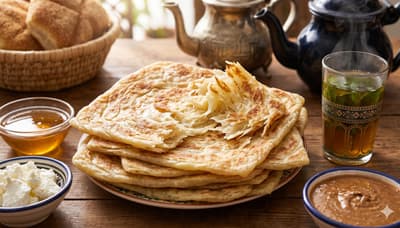
A rich, flaky square flatbread from the Maghreb breakfast table. Fine semolina and all-purpose flour are kneaded into a supple dough, then stretched paper-thin on an oiled work surface. Each sheet is brushed with melted butter and oil, dusted with dry semolina for separation, and folded into a neat square before a quick pan-fry yields shatteringly crisp layers outside and a tender, pull-apart center. Serve torn with honey, cheese, or amlou beside mint tea.

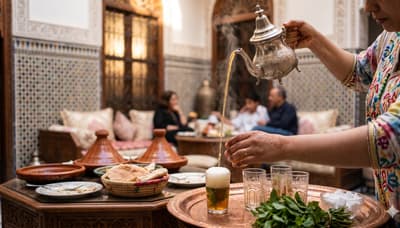
Sweet gunpowder green tea poured high for foam—served after every meal.

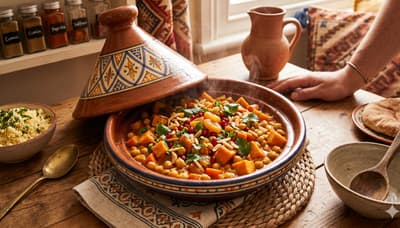
A weeknight vegan tagine with warming spices and creamy sweet potato.

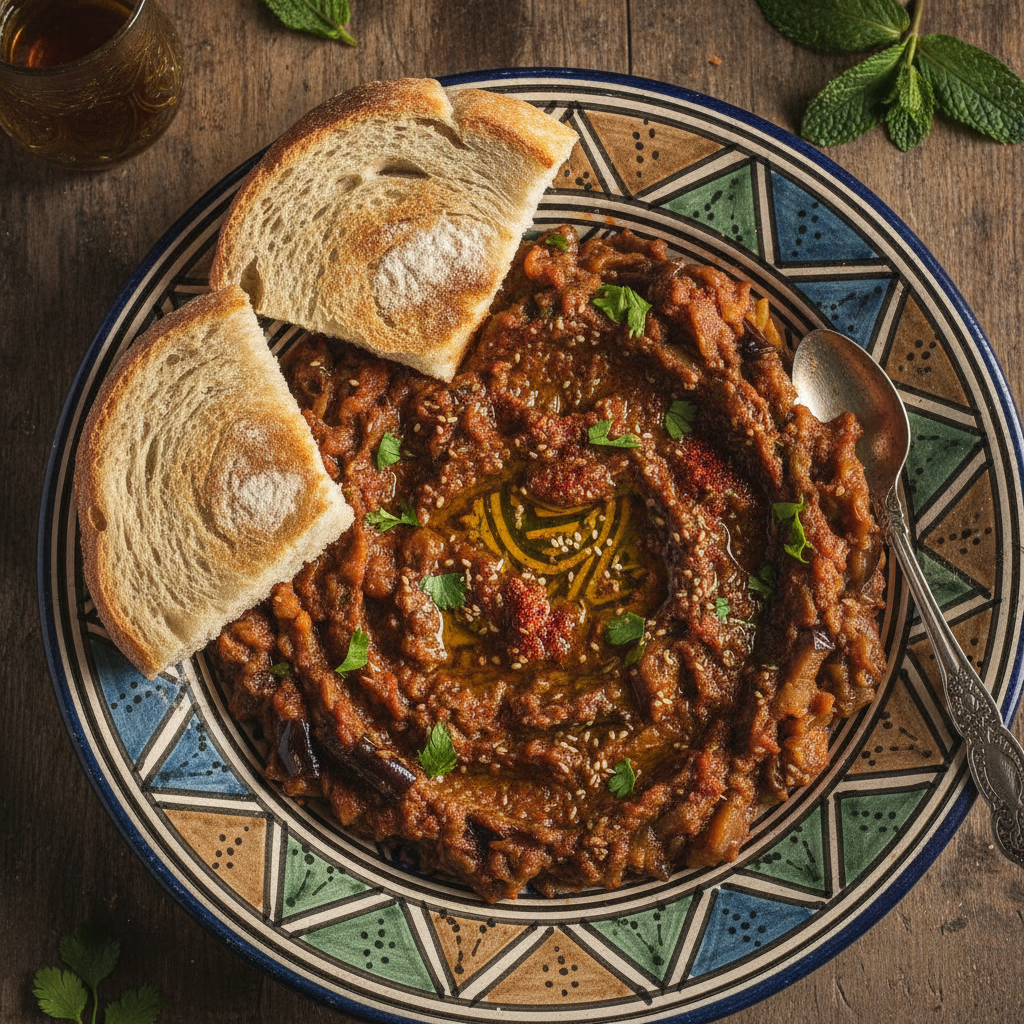
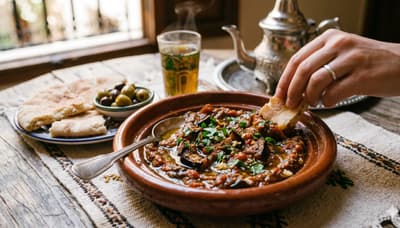
Smoky eggplant and tomato salad enriched with garlic and olive oil—a mezze essential.

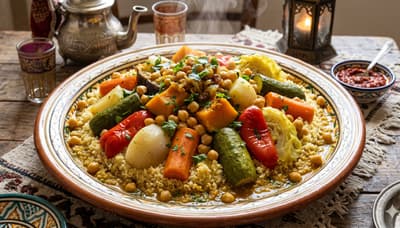
Festive couscous steamed above a fragrant broth of seasonal vegetables and chickpeas.