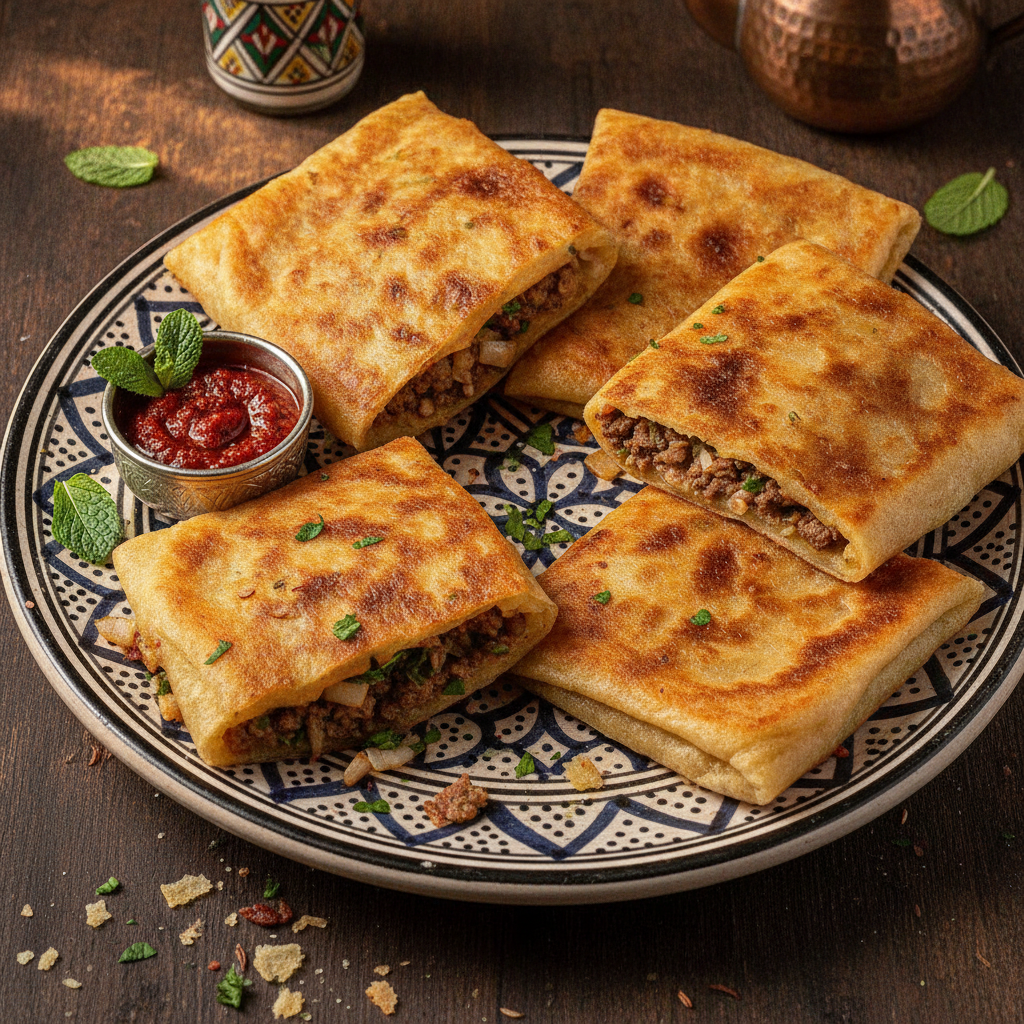
Stuffed Msemen (Rghaif) - Stuffed Moroccan Flatbread
Moroccan stuffed flatbread with savory filling, pan-fried until crispy and golden. A street food favorite.
Dish type
Browse 11 authentic Moroccan flatbread recipes. Each dish includes scaled ingredients, step-by-step instructions, and prep times so you can cook with confidence.
Moroccan stuffed flatbread with savory filling, pan-fried until crispy and golden. A street food favorite.
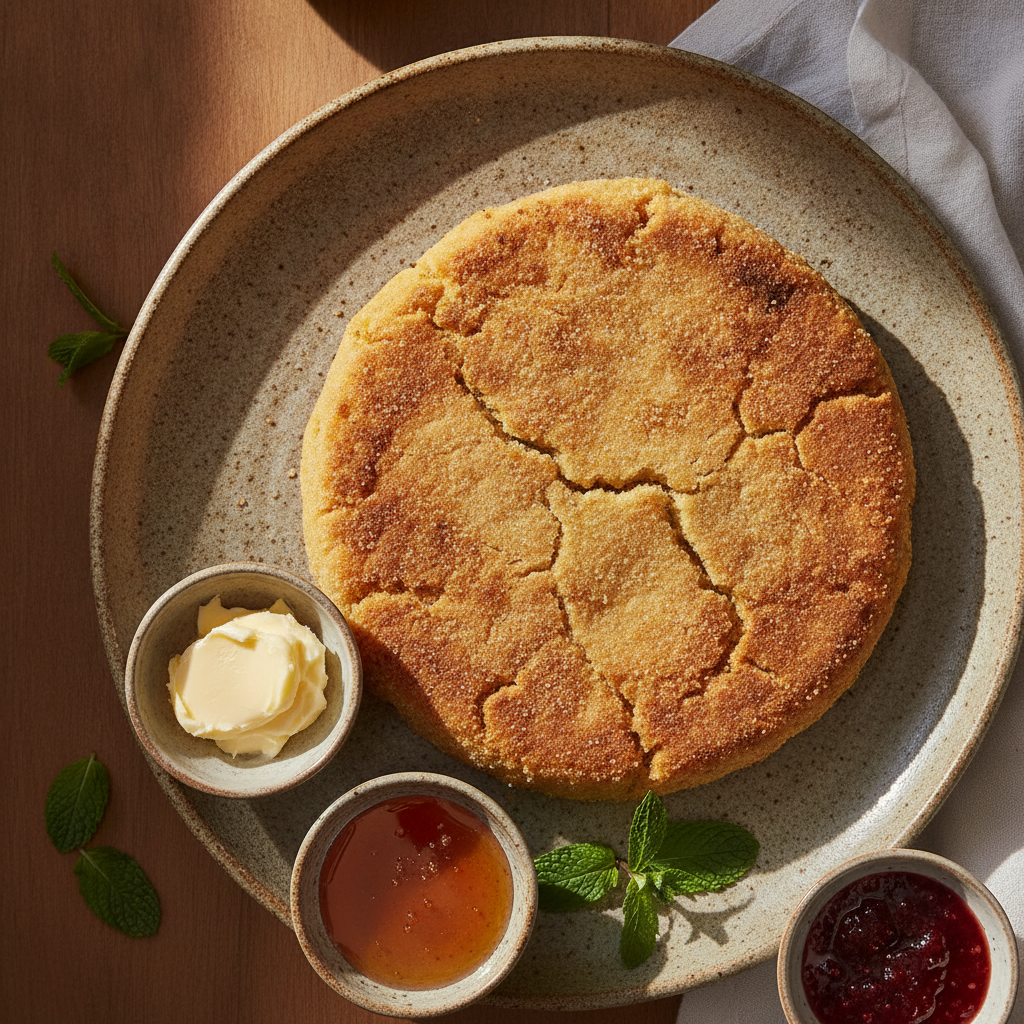
A golden, crispy-outside, tender-inside semolina skillet bread. A quick Moroccan flatbread perfect for any meal, served with butter, honey, or jam.
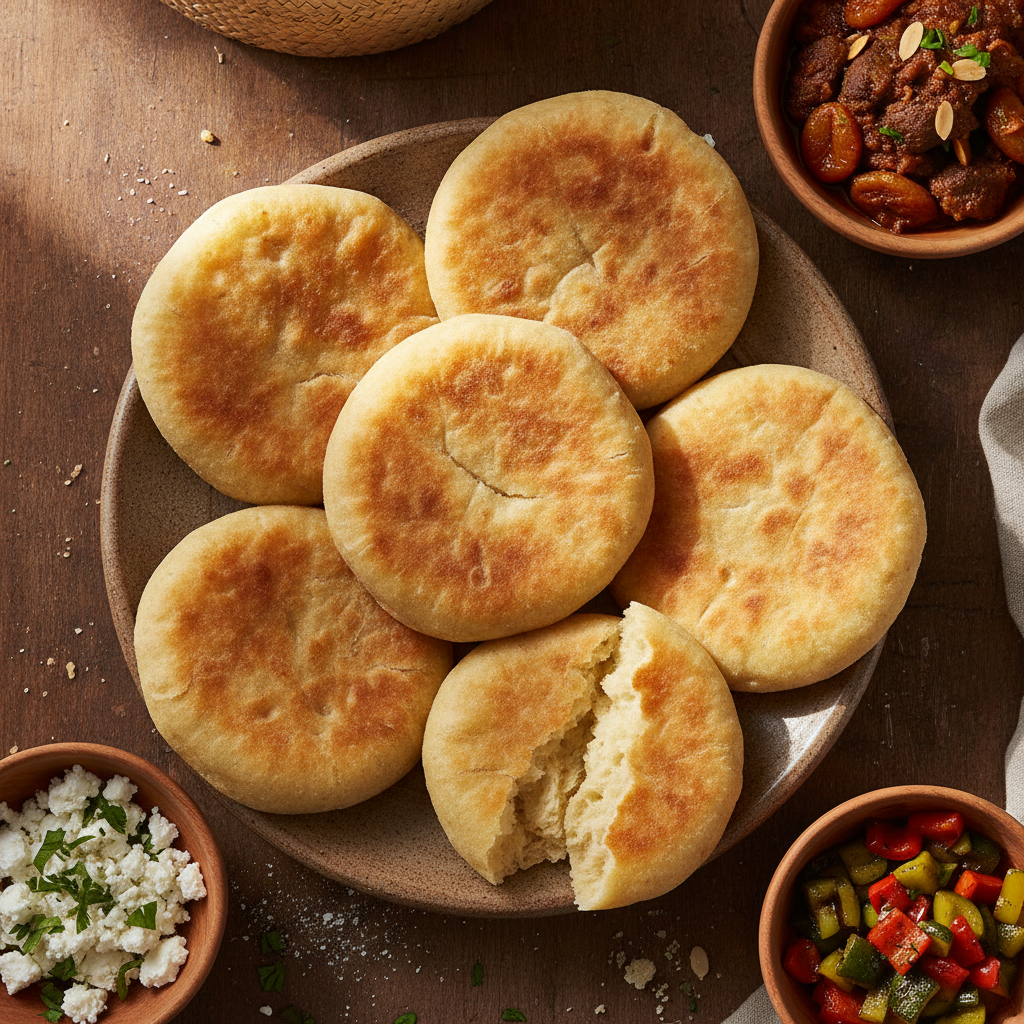
Soft, pillowy Moroccan flatbread pockets perfect for filling with tagine, cheese, or vegetables. A versatile street food and lunch staple.
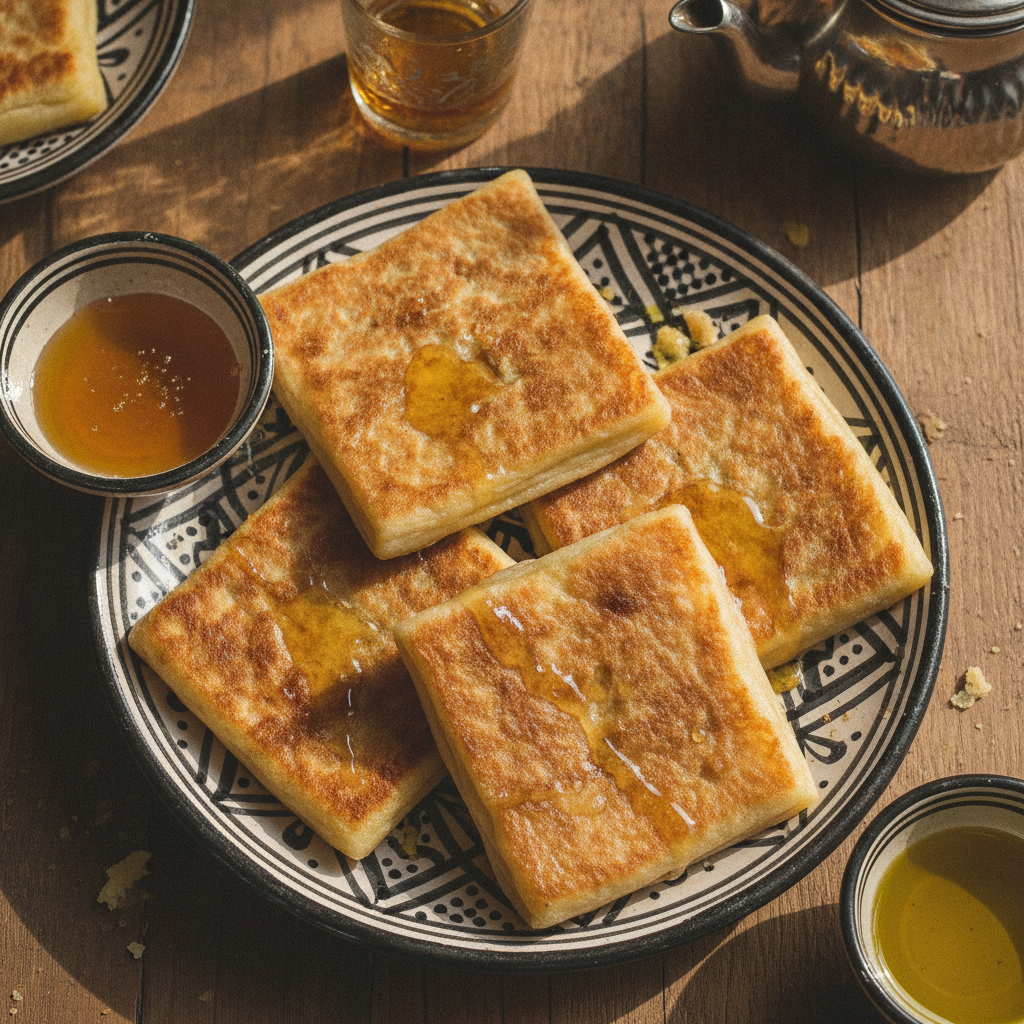
Flaky, folded Moroccan layered flatbread with a crispy exterior and tender interior. Traditionally served with honey and olive oil.
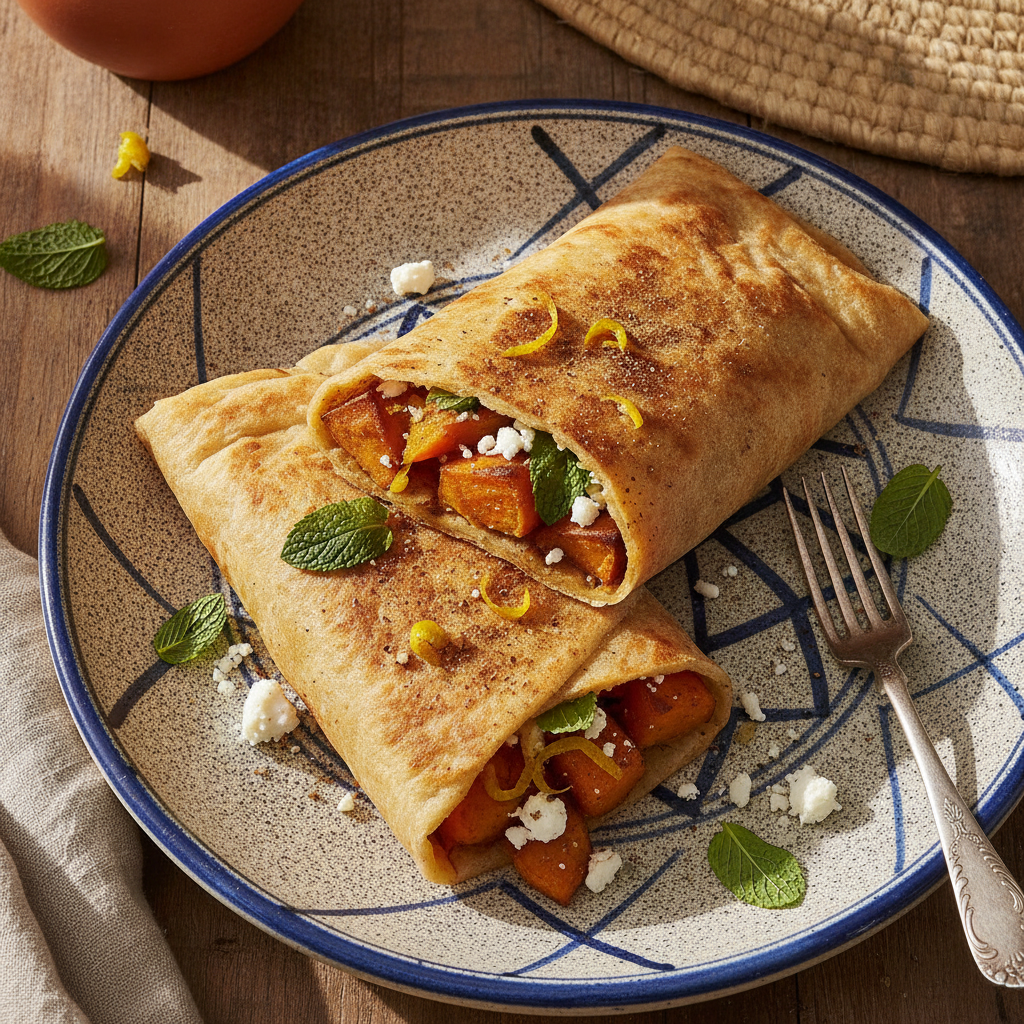
Warm, flaky msemen flatbread wrapped around ras el hanout-spiced roasted sweet potato, crumbled feta, fresh mint, and a bright hit of preserved lemon. A satisfying handheld lunch that turns Morocco's classic square pancake into a wrap.
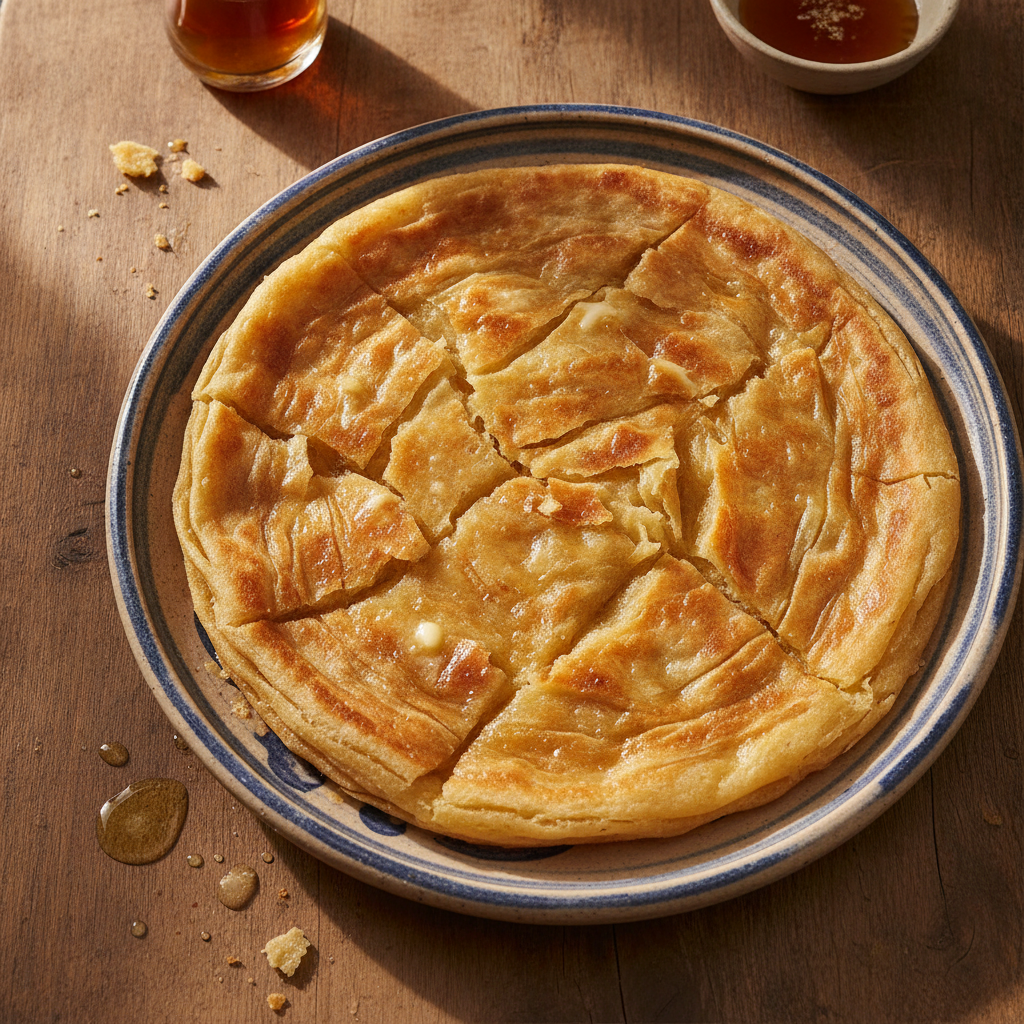
Crispy, golden Moroccan flatbread with delicate shattered layers, traditionally cooked on a cast-iron griddle and brushed with melted butter or oil. The key is patience when stretching the dough thin and layering it carefully.

Rghaif elevates laminated msemen dough into a savory showpiece: the same butter-brushed, semolina-sprinkled layers are wrapped around spiced ground beef, sweet onions, and roasted peppers—or a classic suet-and-herb filling—then baked until the pastry shatters and the filling steams inside. Unlike pan-fried msemen, the oven dries the edges into a crackling shell perfect for cutting into squares at gatherings.
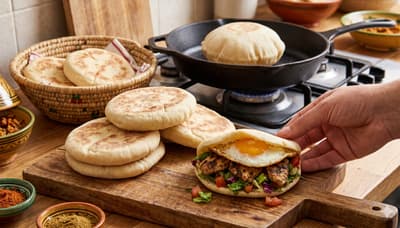
Batbout are soft, chewy stovetop breads that puff like balloons in a dry skillet, forming a hollow pocket inside—Morocco’s answer to pita. They share the same yeast dough family as khobz but are rolled thinner and finished on the griddle rather than in a bread oven, making them ideal for sandwiches stuffed with grilled meats, salads, or fried eggs.
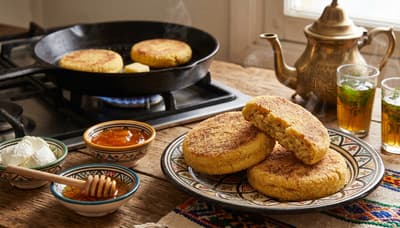
Harcha is Morocco’s beloved “rough bread”—a crumbly, biscuit-like round made from coarse semolina bound with butter, milk, and baking powder. No yeast means it comes together quickly; the dough is patted into disks and pan-fried until the exterior is golden and slightly gritty while the inside stays moist. Wonderful split open with soft cheese, jam, or a drizzle of honey at breakfast.
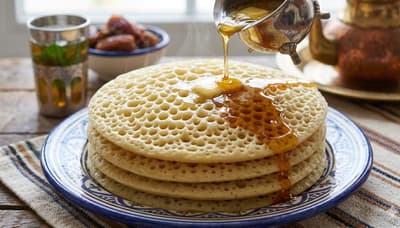
Nicknamed “thousand-hole pancakes,” baghrir are spongy, lace-like crepes made from semolina and yeast. They cook only on one side in a cool pan—no flipping—so heat travels upward and hundreds of tiny bubbles burst on the surface, leaving a honeycomb ready to soak up butter and honey. A Ramadan and weekend breakfast favorite across Morocco and Algeria.
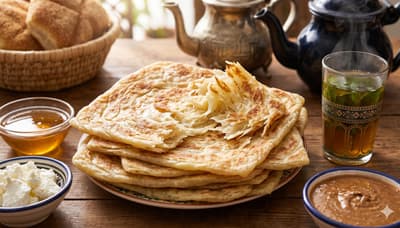
A rich, flaky square flatbread from the Maghreb breakfast table. Fine semolina and all-purpose flour are kneaded into a supple dough, then stretched paper-thin on an oiled work surface. Each sheet is brushed with melted butter and oil, dusted with dry semolina for separation, and folded into a neat square before a quick pan-fry yields shatteringly crisp layers outside and a tender, pull-apart center. Serve torn with honey, cheese, or amlou beside mint tea.