Makrout
Makrout are diamond-shaped semolina pastries filled with a spiced date paste, fried or baked until golden, then bathed in warm honey syrup. Fragrant with cinnamon and orange blossom water, these North African sweets offer a satisfying contrast between the slightly crisp semolina shell and the soft, sticky date center.
 Recipe byChef Amina
Ingredients
Scaled from 24 base servings — local only.
- 400 gFine semolina
- 100 gMelted butter
- 50 mlVegetable oil
- 0.5 tspBaking powder
- 120 mlWarm water, as needed
- 300 gPitted dates, softened
- 1 tspGround cinnamon
- 20 gMelted butter, for date filling
- 1 tbspOrange blossom water
- 1 literVegetable oil, for frying
- 250 tbspHoney
- 60 mlWater, for honey syrup
Instructions
In a large bowl, rub the semolina with the melted butter and vegetable oil until the texture resembles wet sand. Let rest for 20 minutes so the semolina absorbs the fat.
Add the baking powder and gradually mix in warm water, kneading gently until a soft, pliable dough forms. Cover and rest for 15 minutes.
Meanwhile, make the date filling: mash the softened pitted dates with the cinnamon, melted butter, and orange blossom water until you have a smooth, moldable paste.
Divide the semolina dough into portions and roll each into a long log. Using your fingers, press a groove down the center of each log.
Roll the date paste into thinner logs and place them into the grooves, then fold the semolina dough over to fully enclose the date filling, rolling gently to seal and reshape into a smooth log.
Press the log lightly with a carved wooden mold (or the back of a fork) to create the traditional diamond pattern, then cut into diagonal diamond-shaped pieces.
Heat the vegetable oil in a deep pan to about 160°C (325°F) and fry the makrout in batches for 3-4 minutes per side, until golden brown. (Alternatively, bake at 180°C/350°F for 20-25 minutes until golden.)
Meanwhile, warm the honey with the water in a small saucepan over low heat until thin and syrupy.
Dip the warm fried or baked makrout into the honey syrup for a minute, then lift out and let drain on a wire rack.
Let cool before serving; makrout keeps well stored in an airtight container for several days.
Reviews
Sign in to rate this recipe and leave a comment.
No reviews yet — be the first.
Related recipes
Browse all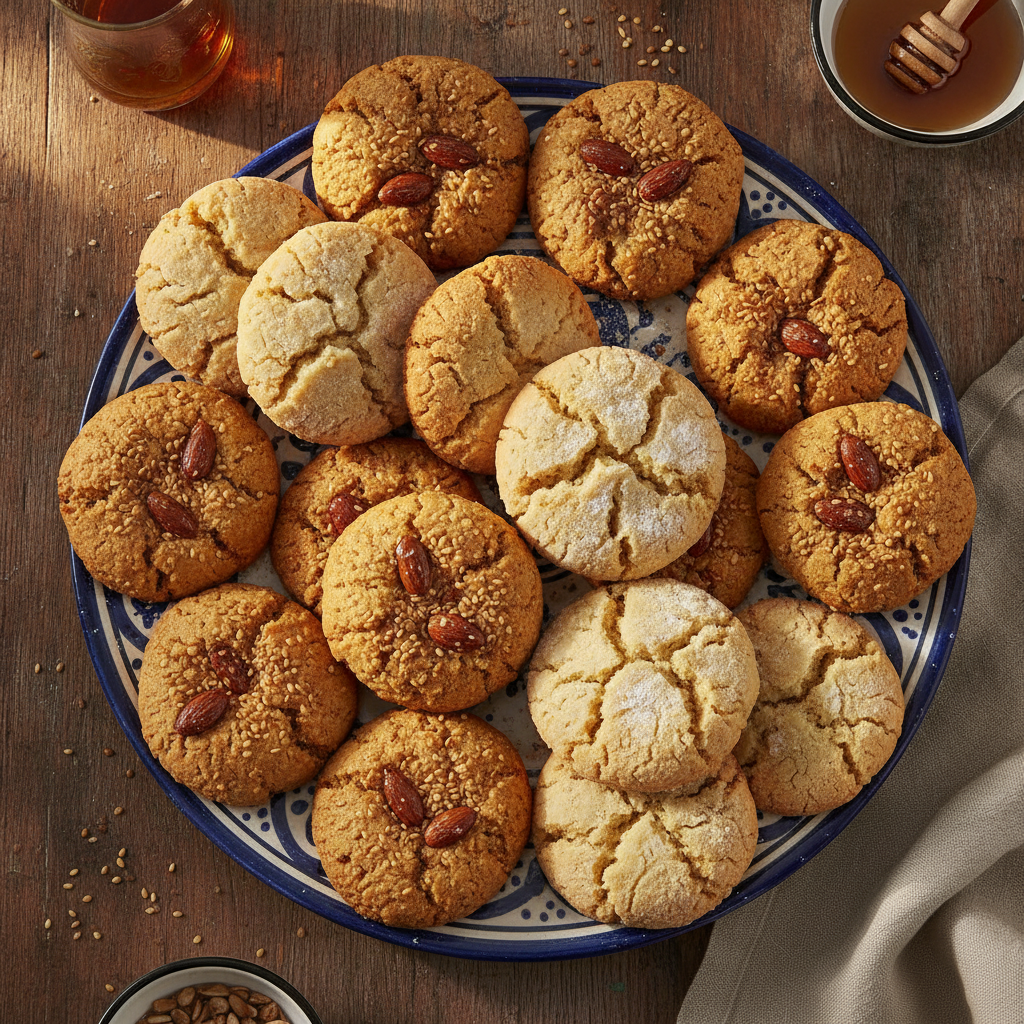
Ghriba (including Ghriba Bahla)
Ghriba are Morocco's beloved crumbly shortbread cookies, prized for their signature cracked, crazed surface and melt-in-the-mouth texture. This recipe includes both the classic almond-and-sesame version and Ghriba Bahla, the plain, no-nut variation made simply with flour, butter, and sugar — equally crumbly and just as addictive with mint tea.
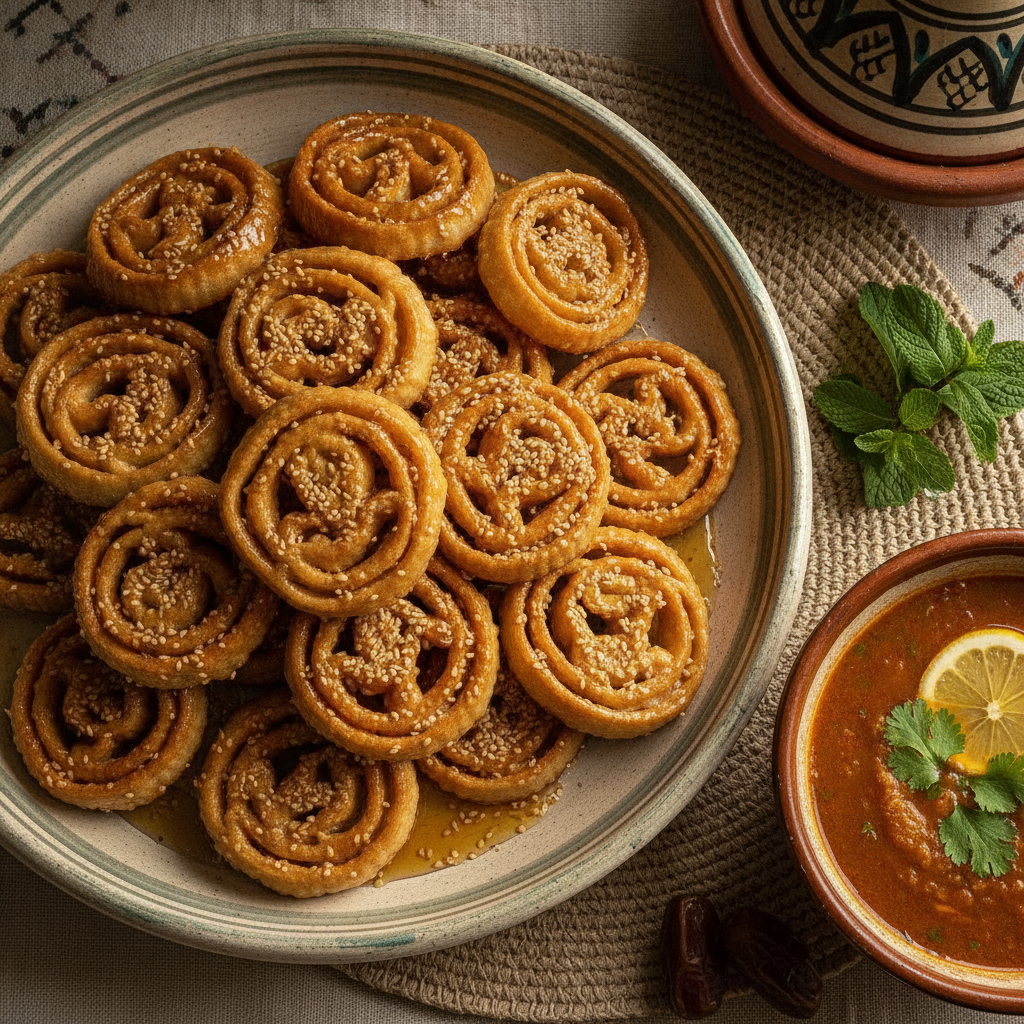
Chebakia (Mkharka)
Chebakia, also called mkharka, are Morocco's iconic flower-shaped, sesame-studded cookies, deep-fried until crisp and then soaked in warm honey infused with orange blossom water. A quintessential Ramadan treat, they're traditionally served alongside a bowl of harira soup to break the fast.
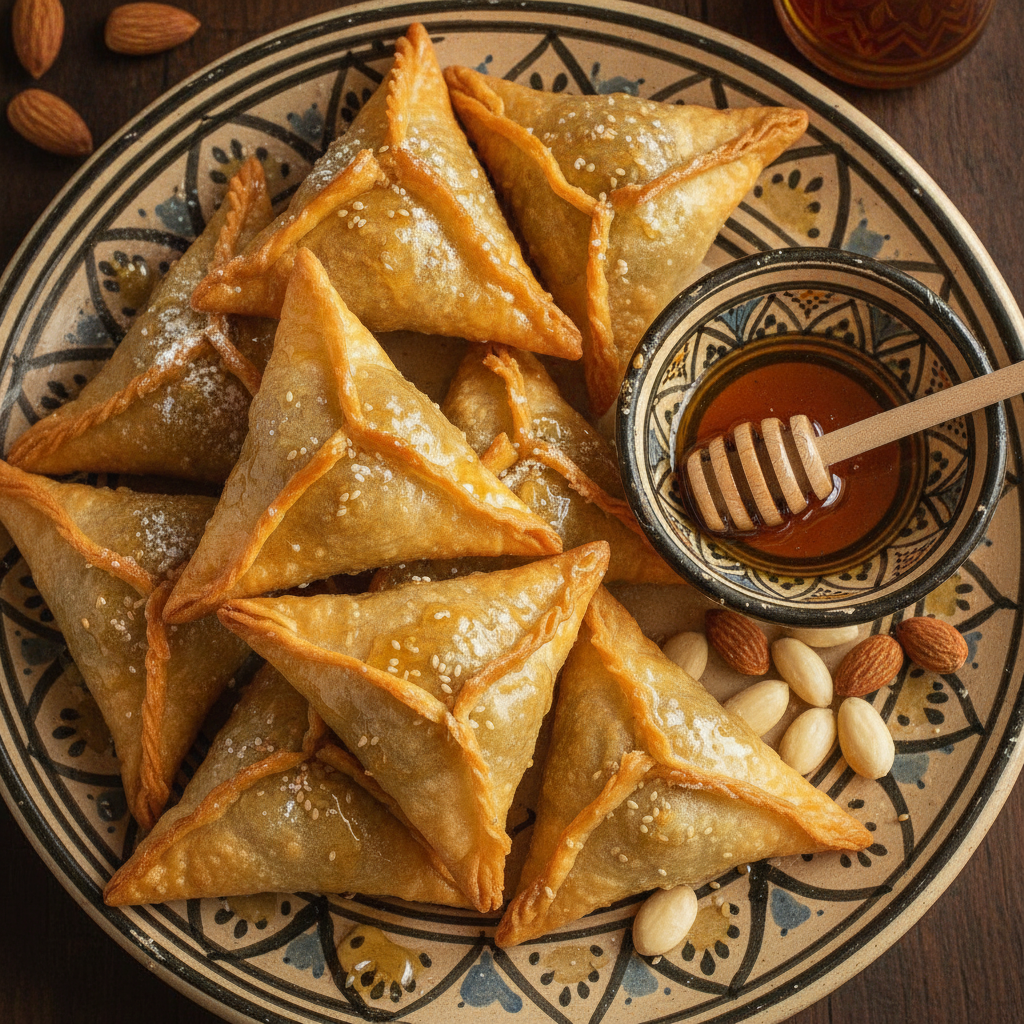
Sweet Almond Briouat
Sweet almond briouats are bite-sized triangular pastries made from crisp, flaky warqa wrapped around a fragrant almond paste filling, fried until golden, and dipped in warm honey. A festive Ramadan and Eid favorite, these little triangles pack a satisfying crunch followed by a soft, nutty, honey-soaked center.
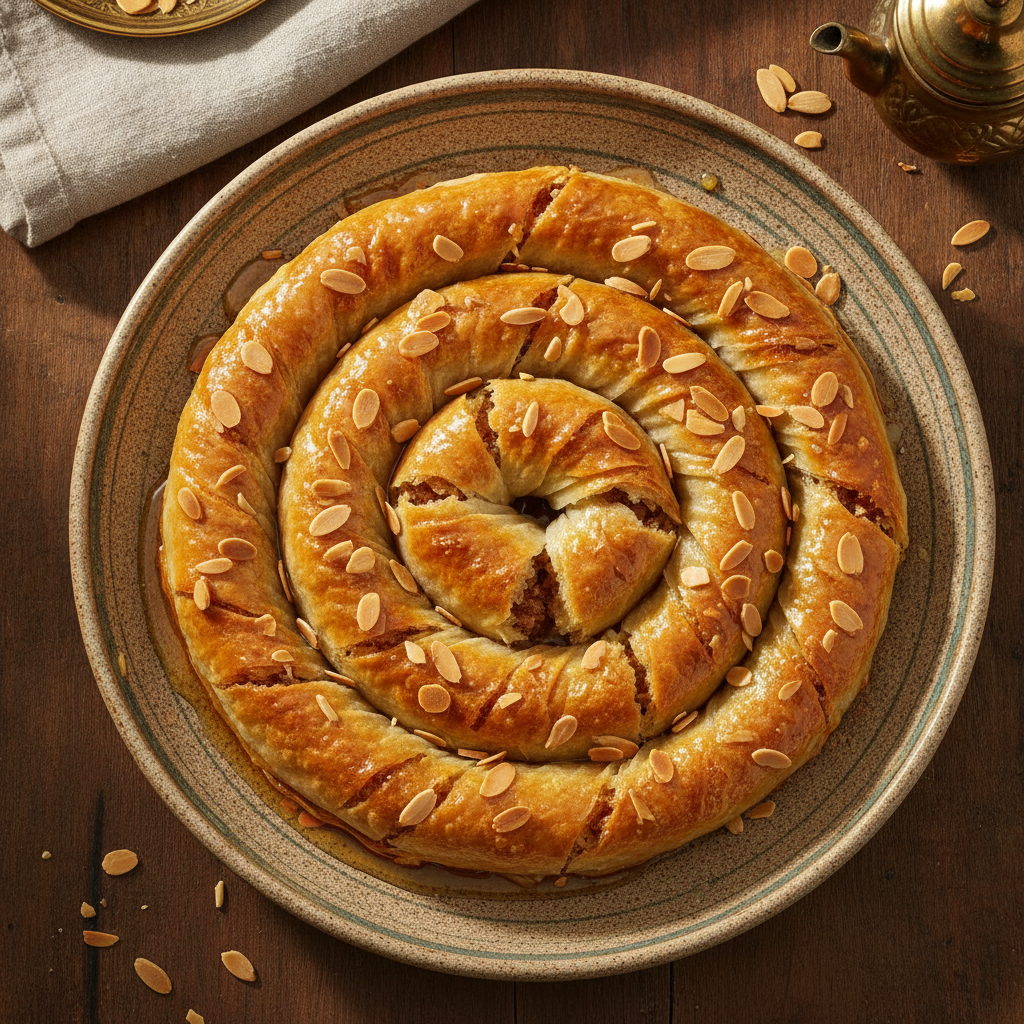
M'hanncha (Snake Pastry)
M'hanncha, or "the snake," is a stunning coiled Moroccan pastry made from delicate sheets of pastry wrapped around a fragrant almond paste filling, then baked until golden and finished with a drizzle of honey and a scatter of toasted almonds. Its dramatic spiral shape makes it a centerpiece dessert for celebrations and Eid gatherings.